Do Clear Aligners Actually Hurt? (What Week 1 Really Feels Like)
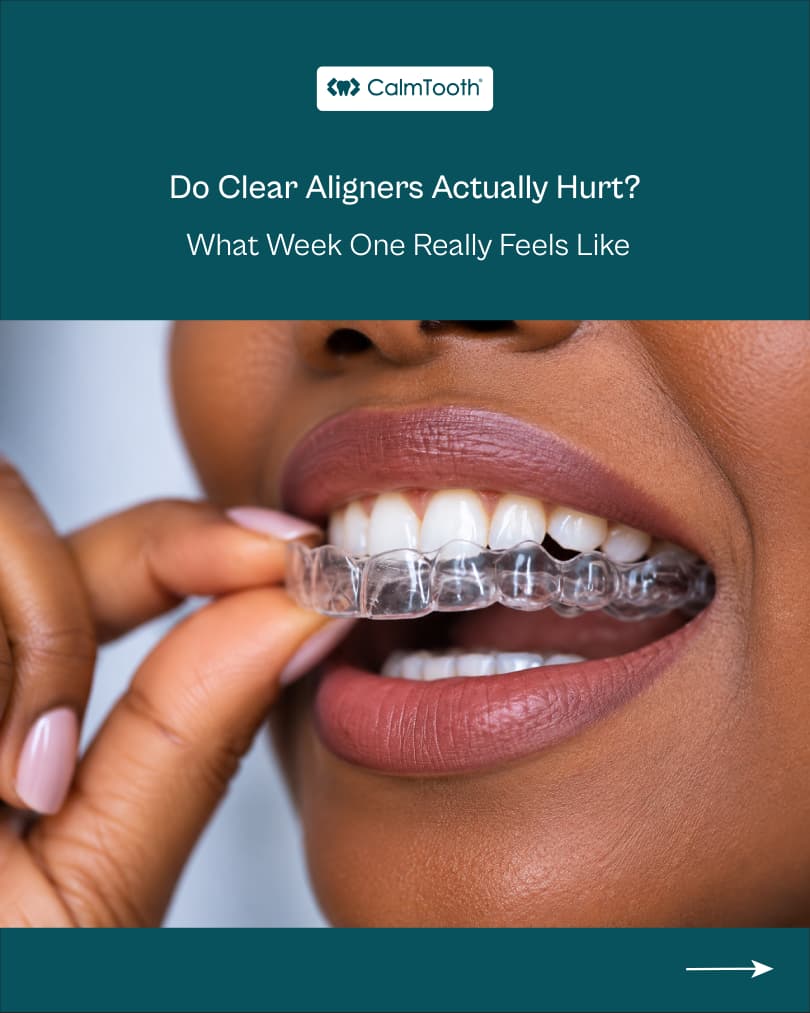
The short answer is no, clear aligners do not cause severe pain.
BUT
You will feel temporary pressure and tenderness, especially during your first week.
Knowing what to expect during your first 7 days removes fear and helps you navigate the transition with total confidence.
The Science of Aligner “Pain”: Pressure vs. Injury
It helps to understand why aligners cause tenderness.
When you pop in a new set of aligner trays, they apply precise, controlled forces to specific teeth. This pressure triggers a natural biological response within your periodontal ligament—the tiny connective tissue fibers that anchor your teeth to the surrounding jawbone.
This mild inflammation is actually a sign that your treatment is working! As your bone surrounding the tooth remodels to its new position over 3 to 5 days, the pressure subsides.
4 Common Sources of Week 1 Discomfort (And How to Fix Them)
Beyond tooth tightness, new aligner wearers sometimes experience minor physical irritation as their mouth adapts.
1. Attachment / Button Friction
The Cause: Small, tooth-colored composite bumps (attachments) bonded to your teeth can feel sharp against your inner lips or cheeks when trays are out for meals.
The Fix: Apply a small dab of clear orthodontic wax over any rough attachments while eating, or rinse with warm salt water to soothe delicate oral tissue.
2. Rough Aligner Edges
The Cause: Occasionally, the plastic laser-cut margin of a tray may rub lightly against your tongue or gumline.
The Fix: Use a clean nail file or emery board to gently smooth down the sharp plastic edge, or ask your dentist to buff it at your next checkup.
3. Soreness When Removing Trays
The Cause: Pulling trays out off tight teeth during the first 48 hours can feel intense.
The Fix: Never pull from the front! Unhook the aligner from the inside molars on both sides first, then gently lift forward. Using an aligner removal tool (Othokey) prevents pulling on tender teeth.
4. Dry Mouth and Speech Lisp
The Cause: Your brain initially registers the plastic trays as a foreign object, occasionally causing temporary dry mouth or a subtle lisp on “S” and “T” sounds.
The Fix: Stay hydrated by drinking plenty of cool plain water. Your tongue will adapt to the aligner thickness within 48 to 72 hours of regular talking.
Pro Tips to Minimize Aligner Soreness
1. Pop in New Trays Before Bed:
Always change to a fresh aligner set right before sleep. Sleeping through the first 6 to 8 hours of peak pressure minimizes daytime discomfort.
Use Chewies / Aligner Seaters:
Biting down gently on soft foam aligner chewies for 3–5 minutes helps seat the tray fully over your teeth, distributing pressure evenly and speeding up the adaptation phase.
Stick to a Soft Diet for 48 Hours:
Choose cold or soft foods like yogurt, scrambled eggs, smoothies, and mashed potatoes during the first two days of a new tray.
Maintain the 22-Hour Rule:
Taking your aligners out for extended periods allows your teeth to bounce back toward their original position, resetting the pain cycle every time you put them back in.
When to Contact Your Dentist
While mild tightness and tender teeth are completely normal, severe or persistent pain is not. Contact your care team if you experience:
Sharp, throbbing pain in a single tooth that persists beyond Day 5.
Bleeding, swollen, or severely lacerated gum tissue.
An aligner tray that visibly cracks, snaps, or cuts deep into your mouth.
Inability to seat the tray over your teeth despite using chewies.
Frequently Asked Questions (FAQs)
Will every new tray set hurt as much as Week 1?
No! Week 1 is the most noticeable because your mouth is adapting to both teeth movement and having plastic in your mouth.
Can I drink cold water with my aligners in?
Yes! Plain cold water is completely safe to drink with clear aligners in place. In fact, cold water can actually help soothe tender gums during your first week. Avoid hot beverages, as heat can warp the plastic aligners.
Does taking aligners out frequently reduce pain?
Actually, it does the opposite! Leaving aligners out for long stretches causes “lag,” where teeth begin shifting back. Reinserting them forces the ligaments to restart the pressure cycle, prolonging discomfort.
A straighter, healthier smile should be a calm and rewarding experience.
If you have questions about starting clear aligners or want an expert evaluation, our team at CalmTooth is here to guide you every step of the way. Contact us today for a stress-free consultation!
You May Also Like